
From Factory to Global Markets: How Human Hair Systems Reach International Buyers
Manufacturing a high-quality hair system is only one part of the journey. Once production is complete, manufacturers and export houses must navigate another equally important stage: getting those products into the hands of international buyers.
From factory dispatch and export documentation to customs clearance, distribution, and repeat orders, the global trade of human hair systems depends on a supply chain that must balance quality, speed, compliance, and reliability.
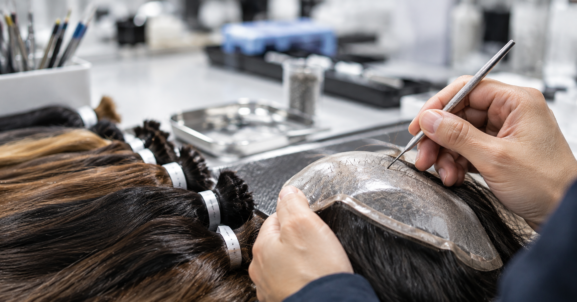
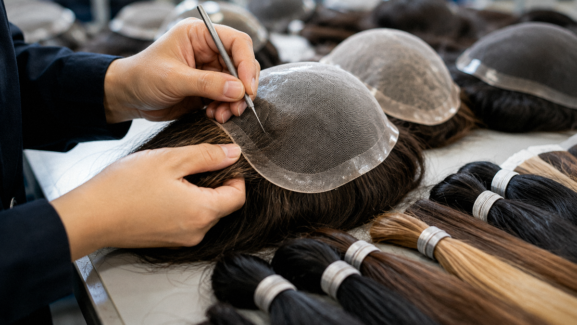
While our previous instalment looked inside the production floor and examined how processed hair is transformed into finished hair patches and replacement systems, this article follows what happens next, as those products move from manufacturing centres to buyers across international markets.
From Factory to Export Shipment
A finished hair system rarely travels directly from a manufacturing unit to its final user.
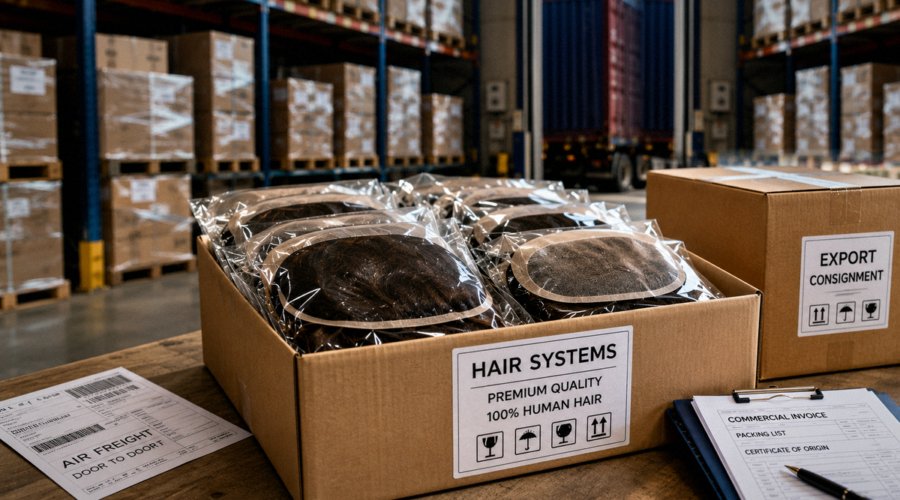
For many exporters, the process begins with consolidating finished products according to specifications such as hair length, density, colour, base construction, and order quantity. Products are then packed for shipment and handed over to freight forwarders or logistics partners responsible for moving consignments to the destination market.
For manufacturers handling international B2B orders, consistency at this stage matters. Packaging, product identification, commercial documentation, and shipment records all need to correspond with the order placed by the buyer.
A small discrepancy in specifications can create problems later, particularly when an order contains customised hair systems produced for a specific brand, salon group, or distributor.
This is one reason why export-oriented manufacturers increasingly treat logistics as an extension of their production process rather than as a separate activity.
The Growing Role of OEM and Private-Label Production
The international hair system market is not driven only by manufacturers selling products under their own names.
A significant part of the business operates through OEM and private-label relationships, where manufacturers produce hair systems according to specifications supplied by overseas brands, distributors, salon chains, or specialist retailers.
These arrangements can involve much more than simply placing a logo on an existing product.
Buyers may specify the dimensions of the base, hair density, colour, length, curl pattern, ventilation method, packaging, and other product characteristics. The manufacturer then has to reproduce those specifications consistently across production batches.
For established exporters, the ability to maintain this consistency can be as important as the ability to offer competitive pricing.
Long-term B2B relationships are often built around reliability: delivering the right product, at the agreed quality, within the expected timeframe.
Navigating International Trade Requirements
Moving human hair products across borders also requires exporters and importers to understand the requirements of their respective markets.
Customs classification is one part of this process. Human hair, wigs, hairpieces, extensions, and related products can fall under different tariff classifications depending on the nature and construction of the product.
Exporters therefore need accurate commercial descriptions and documentation, while buyers need to understand the import requirements applicable in their destination market.
The requirements can also vary from one country to another. Documentation, customs procedures, labelling expectations, duties, and other import requirements should therefore be checked for the specific destination before a shipment is dispatched.
For exporters, international trade is not simply about finding a buyer. It is about building a process that can reliably move the product from the factory to that buyer.
Where International Buyers Fit Into the Supply Chain
The customer at the end of an export transaction may be very different from the person who eventually wears the product.
A manufacturer may supply:
- A specialist hair replacement brand
- A private-label distributor
- A salon chain
- A medical or cosmetic hair replacement business
- A regional wholesaler
- An online retailer
Each type of buyer can have different expectations.
A salon chain may prioritise consistency and fast replenishment. A private-label brand may focus heavily on customised specifications and packaging. A distributor may require a broader product range and dependable production capacity.
Understanding these differences allows manufacturers to position their production capabilities more effectively in international markets.
Digital Sourcing Is Changing the Buying Process
International sourcing was once heavily dependent on personal relationships, trade fairs, telephone conversations, and established distributor networks.
Those channels remain important, but the initial discovery process has changed significantly.
Today, an overseas buyer can research manufacturers, compare product capabilities, examine company information, and initiate a sourcing conversation without physically visiting the manufacturing facility.
This has increased the importance of a manufacturer’s digital presence.
A clear website, detailed product information, professional company profile, accessible contact details, and presence on relevant B2B platforms can all influence whether an international buyer decides to make an enquiry.
For exporters, being discoverable is increasingly becoming part of the export strategy itself.
Building a More Reliable Export Supply Chain
As international buyers become more demanding, manufacturers are increasingly expected to offer more than a competitive product.
They need reliable production capacity, consistent quality, clear communication, predictable lead times, appropriate documentation, and the ability to handle customised requirements.
For human hair system manufacturers, this can be particularly important because many products are highly customised rather than standardised commodities.
The strongest export businesses therefore tend to build systems around repeatability. The objective is not simply to complete one successful shipment, but to make the next shipment equally reliable.
That requires coordination between production, quality control, packaging, documentation, logistics, and customer service.
Looking Ahead
The global journey of a human hair system does not end when it leaves the factory. Its success in an international market depends on everything that happens afterwards, from accurate documentation and dependable logistics to buyer relationships and consistent product quality.
As the industry becomes increasingly global, manufacturers that combine skilled production with strong export capabilities will be better positioned to serve international buyers.
In the next instalment of our human grooming series, we will look at OEM and private-label manufacturing, and how these production models are shaping the relationship between manufacturers, international brands, distributors, and end markets.