

From Hair to Hair System: How Modern Hair Patches Are Manufactured
Every finished hair patch begins with two essential elements: high-quality human hair and a carefully engineered base material.
While our previous coverage explored how hair enters the supply chain from South Indian collection points, the next stage takes us onto the production floor. Once the material has been sorted, processed, and graded, the core fabrication process begins. This is where processed hair bundles are transformed into finished hair patches, toppers, and other hair replacement systems through a blend of engineering precision and skilled craftsmanship.
Choosing the Right Base Material
Selecting the right base material is one of the most critical decisions in the production cycle.
There is no universal solution. The choice depends entirely on the intended application and the expectations of the end user.
Modern hair system manufacturing primarily relies on three widely used base materials:
- Lace Bases (Swiss vs. French Lace): Woven from ultra-fine threads, lace bases offer maximum breathability and an invisible hairline. However, they require careful handling during manufacturing as they are delicate and often require reinforcement around the perimeter.
- Polyurethane (PU / Skin Bases): Manufactured using a thin, transparent polyurethane membrane, PU bases mimic the appearance of a natural scalp. They provide excellent adhesive security and are easy to clean, although they offer less natural airflow than lace.
- Monofilament and Silk Tops: Built using fine mesh grids where hairs are individually looped, monofilament bases allow multi-directional parting while maintaining structural rigidity, making them a preferred choice for premium hair topper systems.
The selection of the base material also determines production time, labour intensity, repairability, and ultimately the commercial positioning of the finished product in both domestic and export markets.
Hand Ventilation: Where Craftsmanship Matters
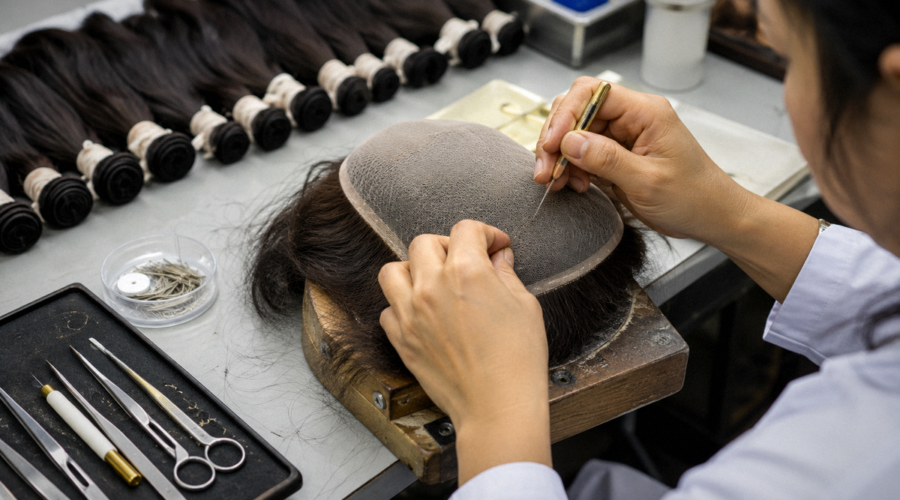
Unlike many mass-produced products, hair systems still depend heavily on skilled manual labour. Modern manufacturing combines engineered base materials with highly specialised hand-ventilation techniques to create natural-looking hair replacement systems.
Despite advances in materials and equipment, much of the industry’s finest work still depends on experienced hand ventilators. In manufacturing units across India and China, women artisans spend years mastering the skill of knotting individual strands onto lace and monofilament bases, one hair at a time.
For ultra-realistic front hairlines, these microscopic knots are often chemically “bleached” to reduce the visibility of dark knot points, creating the illusion that hair is growing directly from the scalp. For skin bases, hair strands can also be injected directly into liquid polyurethane before it cures, eliminating knots entirely for an exceptionally natural appearance.
Finishing and Quality Assurance
Once ventilated, the hair system undergoes rigorous quality assurance protocols before it reaches the market.
Key inspection stages typically include:
- Visual Inspection & Colour Matching: Technicians perform strict colour blending and visual inspections to ensure uniform tone and eliminate mismatched fibre lots.
- Hair Direction and Cuticle Alignment: Every bundle is inspected to confirm proper cuticle flow and root-to-tip alignment, helping minimise tangling and improve product longevity.
- Density Gradation: Hair density is carefully tapered lighter at the hairline and crown, heavier towards the back and sides to replicate natural growth patterns.
- Tensile and Structural Testing: Finished patches undergo pull tests to ensure the hair roots are securely locked into the base, preventing premature shedding during daily wear, styling, and washing.
Coming Up Next
Although machinery and material technologies continue to evolve, the industry’s ability to produce natural-looking hair systems still depends heavily on skilled craftsmanship, making experienced ventilation technicians as valuable today as ever.
In the next instalment of our human grooming series, we will explore the global trade dynamics, supply chain standards, and export trends shaping the future of the hair system industry.