
Sustainability in Brush Manufacturing: Beyond Materials to Process Innovation
Sustainability Is Moving Upstream in the Brush Industry
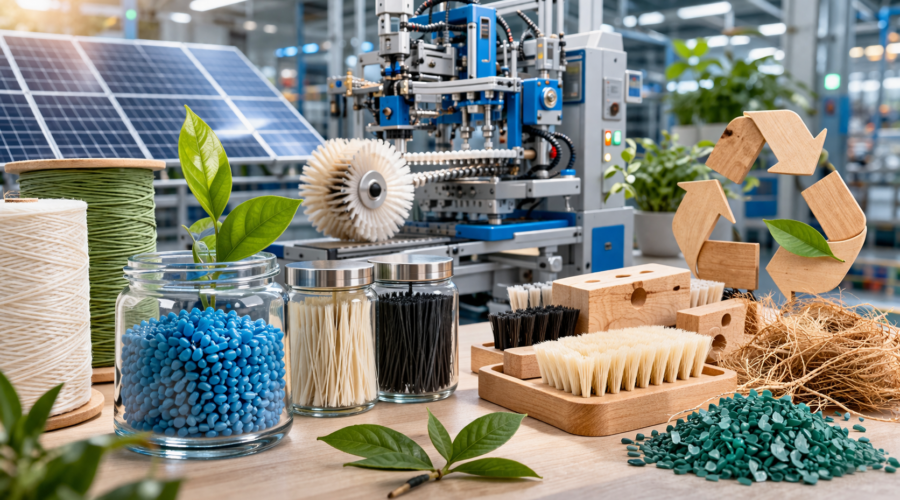
Sustainability in the brush manufacturing industry is often discussed in terms of materials- natural fibres, recycled plastics, and biodegradable alternatives. However, the real transformation is happening upstream, within manufacturing processes and machinery.
Today, sustainability is no longer limited to product design- it is being driven by process efficiency, automation, and precision engineering.
Materials Are Only One Part of the Equation
While the adoption of:
- Natural fibres such as Tampico and coir
- Recycled polymers
- FSC-certified wood
As it continues to grow, these changes alone are insufficient to significantly reduce environmental impact.
The industry is recognizing that how a brush is manufactured matters as much as what it is made of.
Machinery Manufacturers Are Emerging as Sustainability Drivers
A critical but often overlooked factor is the role of machinery manufacturers.
Companies like ZAHORANSKY AG are setting benchmarks in sustainable manufacturing. The company’s recent EcoVadis Bronze Medal recognition reflects its commitment to environmental responsibility, ethical sourcing, and operational sustainability.
Source: American Brush Manufacturers Association (ABMA News)
Innovation Is Replacing Compliance as the Driving Force
The ABMA Innovation Excellence Award has increasingly highlighted solutions that indirectly contribute to sustainability.
Companies such as:
- ZAHORANSKY Group
- The Wooster Brush Company
- Mill-Rose Company
are focusing on:
- Automation
- Precision manufacturing
- Material efficiency
Source: ABMA & industry publications
These innovations result in:
- Reduced raw material waste
- Lower energy consumption
- Improved production efficiency
Global Trade Pressures Are Accelerating Sustainability
Insights from recent industry events indicate that rising costs, supply chain challenges, and evolving buyer expectations are pushing manufacturers toward more sustainable practices.
Export markets, particularly in the US and Europe, are increasingly linking sustainability with:
- Supplier credibility
- Long-term partnerships
- Regulatory compliance
The Future: Circular, Efficient, and Data-Driven
The next phase of sustainability in brush manufacturing will be defined by:
- Circular production models
- Smart product design (modular brushes)
- Biodegradable synthetic filaments
- Data-driven manufacturing efficiency
Conclusion: A Shift from Product to Process
The brush industry is undergoing a fundamental shift. Sustainability is no longer just about eco-friendly materials—it is about redefining manufacturing itself.
From machinery innovation to process optimization, the companies leading this transition are not just reducing environmental impact—they are shaping the future of the industry.
FAQs
Sustainability in brush manufacturing involves using eco-friendly materials, energy-efficient machinery, and waste reduction techniques to minimize environmental impact across the production lifecycle.
Sustainable materials include natural fibres (tampico, coir), recycled plastics (rPET, recycled nylon), and responsibly sourced wood, helping reduce reliance on virgin resources.
Manufacturers are adopting precision machinery, automation, and material optimization techniques to reduce waste, improve efficiency, and lower energy consumption.
Sustainability is becoming critical due to environmental regulations, rising material costs, and increasing demand from global buyers for eco-friendly products and responsible sourcing.