

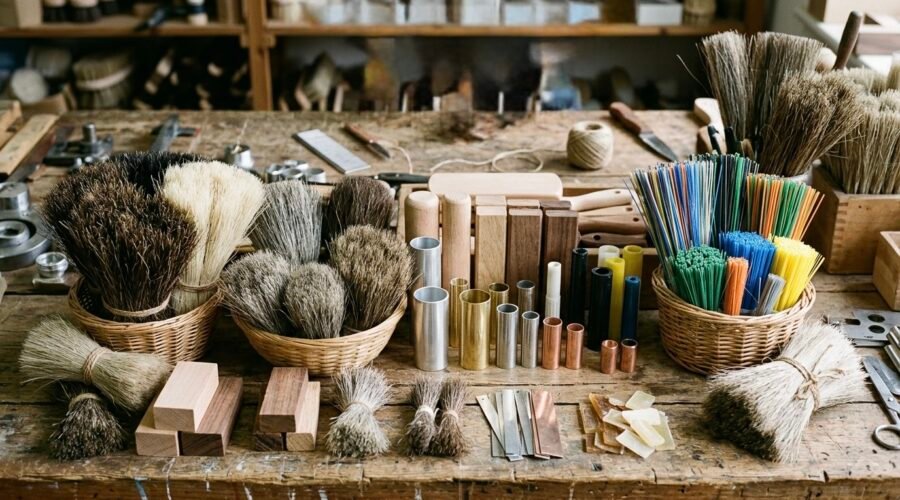
Raw Materials Used in Brush Manufacturing: Types, Properties & Applications
The quality and performance of a brush depend largely on the materials used in its construction. From soft cleaning tools to heavy-duty industrial brushes, the choice of raw materials determines durability, flexibility, and overall efficiency.
Modern brush manufacturing relies on a combination of synthetic and natural materials, each selected based on the specific requirements of the application.
Importance of Material Selection in Brush Manufacturing
Choosing the right material is one of the most critical steps in brush production.
Different applications require different properties, such as:
- Flexibility for gentle cleaning
- Stiffness for aggressive scrubbing
- Resistance to chemicals or moisture
- Ability to withstand high temperatures
Using the wrong material can lead to poor performance, faster wear, or even damage to the surface being treated.
Types of Filament Materials
Filaments (bristles) are the most important part of any brush. They directly interact with the surface and define how the brush performs.
Nylon Filaments
Nylon is one of the most widely used materials in brush manufacturing.
Key Properties:
- High flexibility
- Good abrasion resistance
- Long lifespan
Applications:
- Industrial cleaning
- Conveyor systems
- General-purpose brushes
Polypropylene (PP) Filaments
Polypropylene is known for its resistance to chemicals and moisture.
Key Properties:
- Lightweight
- Water-resistant
- Cost-effective
Applications:
- Wet cleaning environments
- Food processing
- Hygiene-related applications
Polyester Filaments
Polyester offers better heat and chemical resistance than some other synthetic materials.
Key Properties:
- High tensile strength
- Good chemical resistance
- Stable under varying temperatures
Applications:
- Industrial cleaning
- High-temperature environments
Abrasive Nylon Filaments
Abrasive nylon contains embedded grit such as silicon carbide or aluminium oxide.
Key Properties:
- High abrasion capability
- Consistent surface finishing
- Durable under heavy use
Applications:
- Deburring
- Surface finishing
- Polishing metal and wood
Metal Filaments (Steel, Brass, Stainless Steel)
Metal filaments are used for heavy-duty industrial applications.
Key Properties:
- High strength
- Aggressive cleaning ability
- Heat resistance
Applications:
- Rust removal
- Weld cleaning
- Surface preparation
Natural Bristles
Natural fibres are still used in specific applications where softness and liquid retention are important.
Examples:
- Boar hair
- Horsehair
- Plant fibres
Applications:
- Paint brushes
- Polishing
- Speciality cleaning tools
Materials Used for Brush Bases and Handles
Apart from filaments, the base or handle of a brush also plays a crucial role in its durability and usability.
Plastic Bases
Plastic is widely used due to its versatility and cost-effectiveness.
Benefits:
- Lightweight
- Moldable into different shapes
- Resistant to moisture
Wooden Bases
Wood is commonly used in traditional and household brushes.
Benefits:
- Strong and durable
- Natural appearance
- Good grip
Metal Bases
Metal bases are used in industrial brushes where strength is critical.
Materials Include:
- Aluminium
- Steel
Benefits:
- High durability
- Suitable for heavy-duty applications
Factors Affecting Material Selection
Selecting the right combination of materials depends on several factors:
- Type of surface being treated
- Level of abrasion required
- Environmental conditions (heat, moisture, chemicals)
- Machine compatibility
A well-designed brush balances these factors to deliver optimal performance.
Emerging Trends in Brush Materials
The industry is gradually evolving with new material innovations.
Some emerging trends include:
- Development of high-performance synthetic fibres
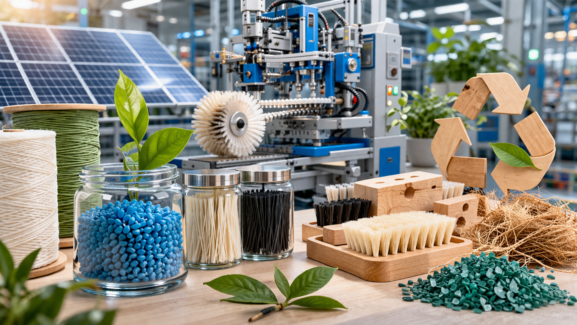
- Increased focus on recyclable materials
- Exploration of eco-friendly alternatives
These developments are driven by both performance requirements and growing environmental awareness.
Conclusion
Raw materials are the foundation of brush performance. Whether it is a simple cleaning brush or a highly specialized industrial tool, the right combination of filaments and base materials ensures efficiency, durability, and reliability.
As manufacturing technologies evolve, material innovation will continue to play a key role in shaping the future of the brush industry.
FAQs
Brushes are made using materials such as nylon, polypropylene, polyester, metal wires, natural bristles, and bases made of plastic, wood, or metal.
It depends on the application. Nylon is commonly used, while metal filaments are preferred for heavy-duty tasks.
Abrasive filaments are used for deburring, polishing, and surface finishing in industrial applications.
Synthetic materials offer better durability, consistency, and resistance to environmental factors compared to natural fibres.
Pingback: From Temple to Tress: India's Human Hair Supply Chain