

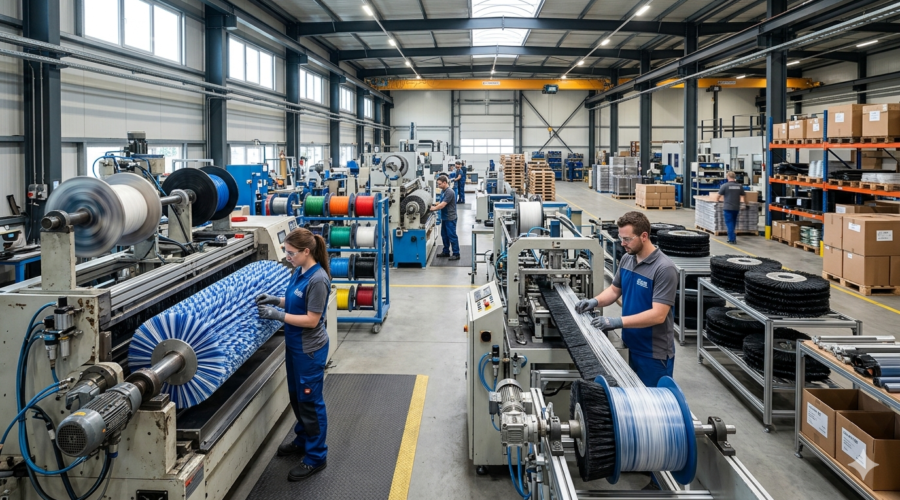
Global Brush Manufacturing Industry: Market Overview, Key Segments, and Future Trends
The brush manufacturing industry is one of those sectors that operates quietly in the background, yet supports a vast range of global industries. From industrial production lines and automotive finishing to household cleaning and personal care, brushes are embedded in everyday processes that often go unnoticed.
Despite their simplicity in appearance, brushes are engineered products. Their performance depends on a precise combination of filament material, density, design, and application environment. As manufacturing processes have evolved, so too has the role of brushes, shifting from basic tools to highly specialised components within automated systems.
Today, the global brush manufacturing industry represents a complex and interconnected ecosystem of manufacturers, raw material suppliers, machinery producers, and distributors serving both industrial and consumer markets.
Why the Brush Industry Matters More Than It Appears
At a glance, brushes may seem like low-value, commoditized products. In reality, they often play a critical role in maintaining efficiency, quality, and consistency across manufacturing processes.
In high-speed production environments, even a minor inefficiency such as improper cleaning or surface finishing can lead to defects, downtime, or increased maintenance costs. Industrial brushes are frequently used to:
- Remove debris from production lines
- Prepare surfaces for coating or finishing
- Control dust and static
- Seal gaps in machinery
- Maintain hygiene standards in sensitive environments
In sectors such as food processing or electronics manufacturing, the wrong brush specification can directly impact product quality or compliance standards. This makes brush selection less of a routine purchase and more of an engineering decision.
Key Segments of the Brush Manufacturing Industry
The global brush market can be broadly divided into four major segments, each with distinct demand drivers and production requirements.
Industrial Brushes
Industrial brushes form the backbone of the industry in terms of technical complexity and application diversity. These brushes are designed for specific mechanical functions within production systems.
They are widely used in:
- Automotive manufacturing
- Metal processing and deburring
- Food and beverage production
- Textile machinery
- Woodworking and panel processing
Unlike consumer products, industrial brushes are often application-specific. Factors such as rotational speed, temperature resistance, chemical exposure, and abrasion levels determine the choice of filament and brush construction.
In many cases, manufacturers develop custom-engineered brushes to match specific machinery or production requirements.
Household Cleaning Brushes
This segment includes everyday products such as floor brushes, scrub brushes, bottle brushes, and kitchen cleaning tools.
While less technically complex than industrial brushes, this segment is highly competitive and driven by:
- Cost efficiency
- Product durability
- Ergonomic design
- Large-scale manufacturing capabilities
Demand in this category is closely tied to consumer markets, retail distribution, and private-label production.
Personal Care Brushes
Personal care brushes, including toothbrushes, hairbrushes, and cosmetic brushes, represent a high-volume segment of the global market.
This category is heavily influenced by:
- Hygiene and safety regulations
- Branding and product differentiation
- Material innovation (soft filaments, anti-bacterial properties)
Toothbrush manufacturing alone accounts for billions of units annually, making it one of the largest sub-segments within the brush industry.
Technical and Speciality Brushes
Speciality brushes are designed for niche or high-precision applications. These include:
- Antistatic brushes used in electronics manufacturing
- Strip brushes for sealing industrial enclosures
- Roller brushes used in automated cleaning systems
These brushes often require precision engineering and customised production, making them a higher-value segment despite lower volumes.
Materials: The Foundation of Brush Performance
The evolution of brush manufacturing is closely linked to advancements in filament materials.
Historically, natural materials such as animal hair and plant fibres were widely used. While still relevant in certain applications, modern brush manufacturing increasingly relies on synthetic materials that offer greater consistency and durability.
Common filament materials include:
- Nylon – widely used for its flexibility and wear resistance
- Polypropylene – cost-effective and suitable for wet environments
- Polyester – offers good chemical and temperature resistance
- Abrasive nylon – used for deburring and surface finishing
- Wire filaments – used in heavy-duty industrial applications
- Natural bristles – still preferred in certain polishing and cosmetic applications
Material selection is often the most critical factor in determining brush performance, especially in industrial environments.
Machinery and Manufacturing: From Manual to Automated Production
Brush manufacturing has evolved significantly with the introduction of automation.
Modern production relies on specialised machinery capable of high-speed, high-precision operations. Common machine types include:
- Staple-set machines
- Anchor wire machines
- Twist-in-wire machines
- Strip brush forming machines
Automation allows manufacturers to:
- Increase production volumes
- Maintain consistent quality
- Reduce labour dependency
- Produce customised designs at scale
For industrial applications, precision in filament placement and density is essential. Even small variations can impact performance, especially in automated systems.
Global Manufacturing Landscape
The brush manufacturing industry operates within a global supply chain, with different regions specialising in different aspects of production.
- Europe (Germany, Italy): Known for advanced machinery and high-precision engineering
- Asia (China, India): Major hubs for large-scale manufacturing and exports
- North America: Focus on specialised and high-performance applications
India, in particular, has emerged as a competitive manufacturing base due to its combination of skilled labour, cost efficiency, and growing export capabilities.
Industry Trends Shaping the Future
While the brush industry is rooted in traditional manufacturing, several key trends are shaping its future.
Automation and Customisation
Manufacturers are increasingly moving toward automated production systems while also offering customised brush solutions tailored to specific industrial needs.
Material Innovation
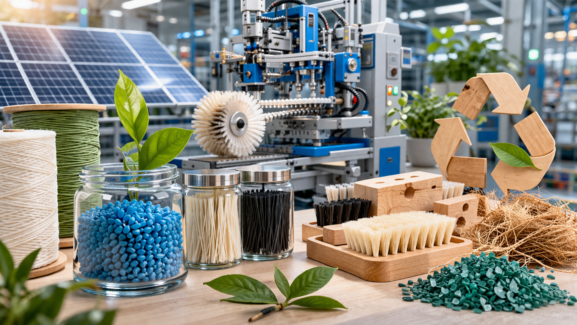
Sustainability
There is growing interest in:
- recyclable materials
- biodegradable components
- eco-friendly production processes
Although still developing, sustainability is expected to become a more significant factor in the coming years.
Where the Industry is Headed
The brush manufacturing industry is unlikely to undergo dramatic disruption, but it will continue to evolve steadily alongside global manufacturing trends.
As industries demand greater efficiency, precision, and automation, the role of brushes as functional components rather than simple tools will become even more important.
For manufacturers, suppliers, and buyers, understanding these shifts is essential for staying competitive in an increasingly interconnected global market.
FAQs
The brush manufacturing industry involves the production of brushes used in industrial, household, and personal care applications, using various materials and manufacturing processes.
Common materials include nylon, polypropylene, polyester, wire filaments, and natural bristles such as animal hair.
Industries such as automotive, food processing, electronics, metalworking, and construction widely use industrial brushes.
Germany and Italy are known for machinery, while China and India are major manufacturing and export hubs.

Pingback: Registration Opens for 66th FEIBP Congress in Lyon