
Interclean Shanghai 2026: What’s Taking Shape One Month Before the Show
With the floor plan updated and the conference programme now taking shape, Interclean Shanghai 2026 is beginning to reveal the issues, technologies, and business priorities likely to dominate conversations when the show opens in October.
Interclean Shanghai 2026 is now just four weeks away. When the doors open at the Shanghai New International Expo Centre (SNIEC) from 28–30 October 2026, visitors will find an event whose focus extends well beyond static machinery displays.
The latest official programme outlines a three-day schedule built around professional education, automation, operational efficiency, cross-border commerce, and sector-specific sanitation demands. With the show floor plan updated and the exhibitor database expanding, the event is clarifying the strategic priorities shaping China’s cleaning and hygiene market.
The Show Floor and Sourcing Landscape Take Shape
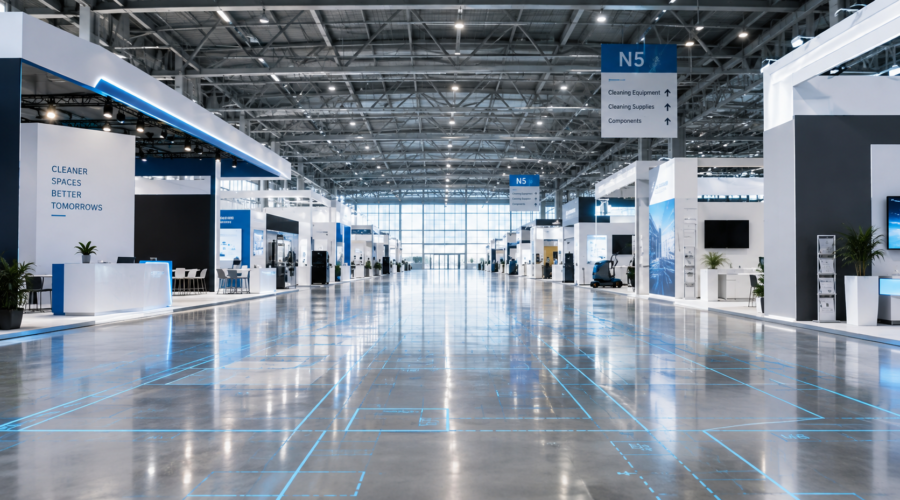
The official Interclean Shanghai floor plan was revised in September, offering a structured look at Hall N5 and the broader exhibition layout. The database reflects a dual-track ecosystem: domestic Chinese manufacturers scaling up their engineering capabilities alongside established international brands looking to expand their presence in East Asia.
The roster features high-profile equipment and technology names, including PUDU, ALTON, OUNITECH, ZHIDING, GADLEE, NILFISK CHINA, JIECHI, KESRIL, LIANXIN, and Trust. International participation is equally evident across consumables and specialty components, with exhibitors such as ACS Industries, Deltrol Controls, Idrobase Group, Orapi Applied, Star Makina / Blancus, and Stavian Tissue confirmed on the floor plan.
For overseas buyers and sourcing directors, the updated hall configuration demonstrates that Shanghai is functioning as an integrated component-and-machinery supply hub, rather than merely a local finished-goods showcase.
Moving Beyond Products: The Programme as an Industry Indicator
The 2026 conference agenda is noticeably broader than a traditional commercial showcase. Alongside the opening ceremony and the Interclean China Elite Awards on 28 October, the schedule features:
- The Education & Training Zone: Developed in cooperation with ISSA, this track runs across all three days. Sessions center on international cleaning standards, workforce retention, operational productivity, and data-driven facility management. Featured speakers include representatives from ISSA, BICSc (British Institute of Cleaning Science), FacilityApps, and the Interclean Group.
- Property & Facility Services Innovation Forum: Bringing commercial property owners and building service contractors directly into dialogue with equipment designers.
This structured emphasis on training and standards reflects a maturation in the sector: modern facility operators are prioritizing measurable process performance and workforce execution alongside equipment procurement.
AI and Robotics: From Pilot Demonstrations to Daily Implementation
A focal point of the conference arrives on 29 October with the session “Smart Cleaning in Action: Driving Operational Excellence,” organized in partnership with the Jiangsu Cleaning Industry Association.
While previous trade cycles focused on introducing autonomous mobile robots (AMRs) as novel engineering concepts, this year’s discussions focus on operational deployment. Key themes address:
- Integrating automated fleets into active commercial spaces alongside human crews.
- Quantifying return on investment (ROI) and maintenance costs over prolonged operational lifecycles.
- Overcoming software, sensor, and mechanical bottlenecks during routine floor maintenance.
With robotics manufacturers occupying substantial floor space, the session bridges the gap between technology claims and practical facility management realities.
The Commercial Reality: Distributor Expansion and International Trade
Scheduled for the opening afternoon, the Distributor Development Forum addresses market development and cross-border trade. The discussions tackle shifting buyer expectations across China, digital distribution models, and strategies for Asian manufacturers entering overseas territories, including Europe, the Middle East, and Southeast Asia.
Interclean Shanghai is positioning itself as a strategic commercial junction. For suppliers, the dialogue on the floor is extending beyond product catalogs into discussions of international compliance, private-label manufacturing, and scalable distribution partnerships.
Healthcare Sanitation: Strict Protocols Drive Specialized Technology
On 30 October, the Healthcare Cleaning Forum, organized in cooperation with Fudan University, will address the distinct operational requirements of clinical environments.
The agenda covers infection prevention, validation of cleaning efficacy, AI-based stain recognition, and VR-supported workforce instruction. Healthcare environments leave little room for mechanical failure or inconsistent surface contact; dedicating a standalone forum to clinical hygiene emphasizes the industry’s shift toward high-compliance, application-specific solutions.
What Does This Mean for Brushes, Fibers, and Components?
For brush makers, filament extruders, and component suppliers, this macro-level shift has direct mechanical implications.
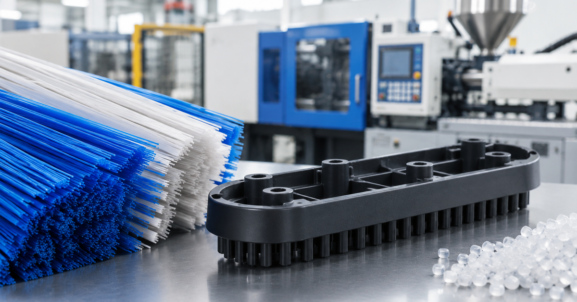
The official product nomenclature at Interclean Shanghai explicitly includes “Components for Manufacturing” alongside finished machines, robotics, and chemicals. The presence of tool and component suppliers, such as LIANXIN and Trust, within the machinery hall underscores a core reality: no matter how advanced the navigation software, sensors, or chassis become, cleaning execution depends entirely on physical surface contact.
As cleaning machines become increasingly autonomous and data-monitored, component demands are shifting:
- Predictable Filament Dynamics: Autonomous scrubbers run fixed, programmed routes where unpredictable filament splay, premature fiber fatigue, or uneven wear patterns can degrade cleaning performance and trigger sensor errors.
- Mounting and Interface Standardization: Rapid-change disc and cylindrical brush cores are essential to minimize downtime in automated facilities.
- Application-Specific Fill Materials: Healthcare and critical environments demand chemical-resistant, non-shedding synthetic filaments, while heavy commercial applications require precise grit distributions.
The technological maturation visible on the Shanghai programme highlights that component design must evolve in lockstep with the machines housing them.
Recognizing Development: The Interclean China Elite Awards
Scheduled for the morning of 28 October, the Interclean China Elite Awards will spotlight advancements across cleaning equipment, digital solutions, and sustainable design.
Rather than focusing solely on multinational flagships, the awards provide insight into where domestic Chinese engineering teams and component innovators are focusing their research and development budgets. Monitoring which solutions secure accolades will offer a clear indicator of the technologies set to shape the market over the coming operational cycle.
A Comprehensive View of China’s Cleaning Ecosystem
With 28 October approaching, Interclean Shanghai 2026 is presenting an integrated view of commercial cleaning:
- Robotics and AI are being evaluated on operational reliability and total cost of ownership.
- Formal workforce certification and international operational frameworks are taking center stage.
- Highly regulated verticals like healthcare are dictating dedicated machine and component configurations.
- Component suppliers, brush manufacturers, and machine OEMs are sharing the floor to resolve system-level engineering challenges.
For the international cleaning and brush-manufacturing communities, the final weeks of preparation point to an event focused on how mechanical tools, advanced materials, and digital platforms integrate on the floor.