
The Brush Beneath the Machine: What Interclean Shanghai 2026 Could Reveal About Cleaning Technology
Interclean Shanghai 2026 is set to bring cleaning equipment, robotics, smart technologies and component suppliers together in Shanghai. For the brush industry, the opportunity is to look beyond the machines themselves and examine how changing equipment designs are influencing the brushes, filaments and components inside them.
Interclean Shanghai 2026 will take place from 28–30 October at the Shanghai New International Expo Centre (SNIEC). The official event positioning covers equipment, machines, robotics, high-pressure cleaning, components for manufacturing and related products, making the show relevant not only to cleaning-equipment manufacturers and distributors but also to companies supplying components into the sector.
For Brushes, Hairs & Fibres, that creates a different question from simply asking which cleaning machines will be launched in Shanghai:
What is happening to the brush inside the machine?
Beyond the Machine: Why Brushes Matter
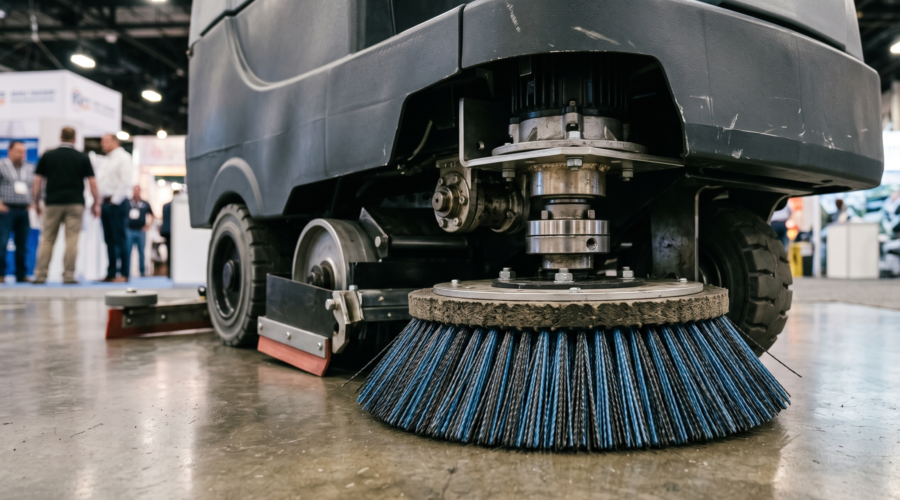
Commercial floor scrubbers, sweepers and other cleaning machines ultimately depend on physical contact between the cleaning tool and the surface.
That makes the brush an important part of the overall system.
The machine may determine speed, pressure, water delivery, navigation and operating cycles, but the brush determines how that equipment interacts with the floor.
As cleaning equipment becomes more automated and application-specific, brush manufacturers are likely to face increasingly detailed requirements around:
- Filament material
- Filament diameter and stiffness
- Tuft density
- Brush geometry
- Wear resistance
- Mounting systems
- Replacement and maintenance
- Consistency between individual brush units
These requirements are not necessarily new. What is changing is the level of integration between the brush and the machine around it.
Autonomous Cleaning Brings a Different Set of Questions
Smart cleaning and robotics are prominent themes in the current Interclean Shanghai programme.
A dedicated session on “Smart Cleaning in Action: Driving Operational Excellence” will examine how cleaning robots, AI and digital tools can enter worksites, integrate with service processes and improve operating efficiency and quality.
For brush manufacturers, the interesting question is what this shift means at component level.
A machine that follows a programmed cleaning route may need predictable and repeatable brush behaviour. Changes in filament stiffness, tuft distribution or brush wear can potentially affect how consistently the cleaning tool interacts with a surface.
This makes consistency an increasingly important consideration alongside basic cleaning performance.
The question for brush suppliers is therefore not simply whether a brush cleans effectively when new, but how consistently it performs as the machine operates and the brush wears.
What Should Buyers Look for in Disc and Roller Brushes?
Visitors attending Interclean Shanghai with an interest in brush manufacturing can look beyond the headline specifications of cleaning machines.
The brush assembly itself deserves closer attention.
Disc brushes
For disc-type systems, buyers can examine:
- Brush diameter and construction
- Filament arrangement
- Tuft density
- Block material
- Mounting method
- Ease of removal
- Replacement procedure
- Available filament configurations
The mounting system is particularly important because a technically capable brush still needs to integrate properly with the machine on which it is used.
Roller brushes
Roller systems raise a different set of considerations.
Here, brush diameter, filament distribution, construction, balance and contact characteristics can influence how the brush operates across the cleaning surface.
For manufacturers, this creates opportunities to work more closely with equipment OEMs on application-specific brush designs rather than relying solely on standard replacement configurations.
Filament Selection Is Still at the Centre
The growing sophistication of cleaning machines does not remove the importance of basic brush engineering.
It arguably makes material selection more important.
Different applications can require different combinations of:
Stiffness.
The filament needs to provide the required contact with the surface without compromising the intended cleaning action.
Wear resistance.
The useful life of a brush depends partly on how the filament and overall construction respond to repeated contact and abrasion.
Chemical compatibility.
Where cleaning chemicals are part of the application, filament and block materials need to be selected with the operating environment in mind.
Recovery and consistency.
Filament behaviour after repeated bending and contact can influence the working characteristics of the brush.
Tuft density.
The amount and arrangement of filament can influence coverage, stiffness and the overall behaviour of the brush.
This is where Interclean becomes interesting for filament producers as well as brush manufacturers.
A Growing Role for Components and Manufacturing Partners
Interclean Shanghai’s official product categories specifically include “Components for Manufacturing”, alongside equipment, machines, robotics, high-pressure cleaning and other cleaning technologies.
That is significant for companies operating further up the supply chain.
The current exhibitor list includes a wide range of Chinese and international companies across cleaning equipment, machinery, components, technology and related products. Among the listed exhibitors are companies such as ACS Industries, ALTON, Guangzhou Superclean Machinery, JIECHI, KESRIL, NILFISK CHINA, PUDU, LIANXIN and others.
For brush manufacturers and component suppliers, the show can therefore be viewed as more than an equipment exhibition.
It is also a potential meeting point between:
Cleaning-machine OEMs → brush manufacturers → filament suppliers → component manufacturers → distributors.
That supply-chain relationship is particularly relevant for companies looking for OEM, ODM or customised brush opportunities.
Shanghai as a Sourcing Opportunity
Interclean Shanghai is explicitly positioning itself as a platform for international buyers to meet Chinese suppliers and explore sourcing opportunities. The organisers currently expect more than 200 exhibitors, 8,000+ visitors and 6,500+ square metres of exhibition space.
For international brush manufacturers and buyers, that creates an opportunity to assess suppliers directly rather than relying solely on online catalogues.
A productive sourcing conversation should go beyond price.
Buyers can ask potential suppliers about:
- Brush construction
- Filament specifications
- Customisation capability
- Minimum order quantities
- Tooling requirements
- Production capacity
- Quality-control procedures
- Export experience
- Replacement-part availability
- OEM and private-label capabilities
For brush manufacturers looking to expand their supply networks in Asia, these questions can be more valuable than simply collecting product brochures.
Sustainability Is Also Worth Watching
Sustainability is another theme appearing in the current Interclean Shanghai programme.
The Interclean China Elite Award is designed to highlight innovative products and concepts, including smart and sustainable developments, while the Distributor Development Forum will address environmental compliance, evolving policies, international demand and green procurement requirements.
For brush manufacturers, this makes materials an area worth watching.
The important questions are not simply whether a product carries a sustainability claim, but:
- Is recycled material being used?
- Does it affect brush performance?
- Can material use be reduced without compromising durability?
- Can components be separated at end of life?
- Are manufacturers moving toward simpler material combinations?
- Can longer brush life reduce replacement frequency?
These are questions that can eventually influence filament specifications, block materials and brush construction.
What Brush Manufacturers Should Watch at Interclean Shanghai 2026
For professionals from the brush and filament industries, the following checklist may be more useful than simply walking the show floor by machine category.
Look at the brush
What type of brush is being used?
Look at the filament
What material, diameter and stiffness are specified?
Look at the construction
How are the filaments secured and distributed?
Look at the mounting
How does the brush connect to the machine, and how quickly can it be replaced?
Look at customisation
Does the machine manufacturer work with application-specific brush designs?
Look at the supplier
Who manufactures the brush or component?
Look at the opportunity
Could the machine manufacturer become an OEM customer or sourcing partner?
The Brush Beneath the Machine
The cleaning industry is becoming increasingly connected to robotics, AI, digital tools and smarter equipment.
Interclean Shanghai’s current programme reflects that shift, with sessions focused on smart cleaning, AI, digital transformation and operational efficiency.
But even as the technology around cleaning becomes more sophisticated, the physical interface between the machine and the surface remains important.
That interface is often a brush.
For brush manufacturers, filament producers and component suppliers, Interclean Shanghai 2026 therefore offers an opportunity to watch not only what the next generation of cleaning machines can do, but also what those machines will require from the brushes inside them.
That may be where some of the most interesting sourcing and technology opportunities at the show are found.